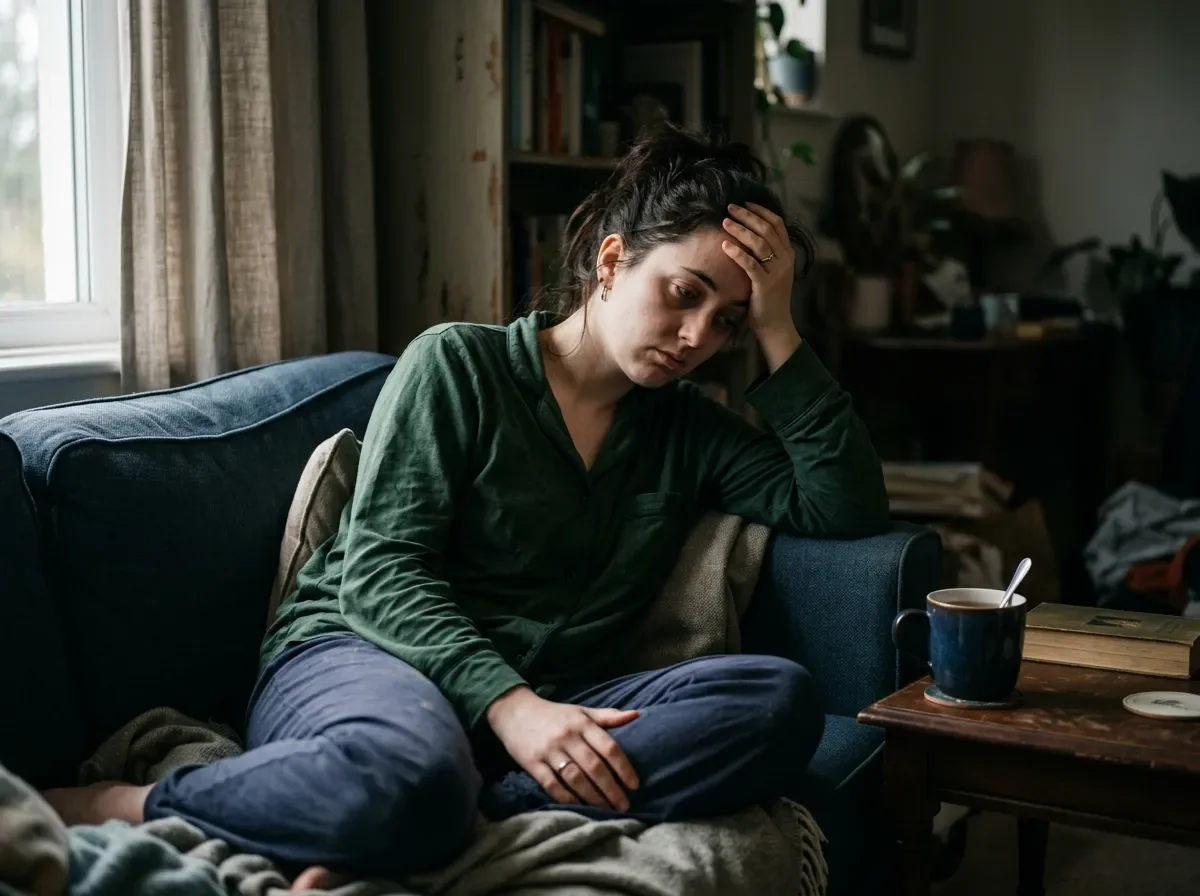
1 in 6 people who get COVID develop long COVID. Here's what that means for you.

1 in 6 people who get COVID develop long COVID. Here's what that means for you.

A major new study found that 16% of COVID patients — roughly 1 in 6 — develop long COVID, more than twice the official count. We break down what the research found, what the condition actually looks like in young adults, why it's still happening now, and what you can actually do about it.
Gen Z Health Daily
2026/6/10 · 23:10
5 订阅 · 5 内容
You've already had COVID. Statistically, if you're in your 20s in 2026, you've probably had it more than once. Most people your age got through it — maybe a rough week, maybe barely noticed it. And then you "recovered."
But a new study says that for roughly 1 in 6 people who get infected, that's not quite where the story ends.

The number most people missed

In late May 2026, researchers at Mass General Brigham published a large study in JAMA Network Open analyzing health records from 457,950 COVID-19 patients across 58 U.S. hospitals. They found that about 16.3% of people who had COVID went on to develop long COVID — chronic symptoms that persisted and required ongoing medical care. 1
That 16% translates to somewhere between 15–18 million Americans — more than twice what the federal government has been reporting. 2
正在加载统计卡片…
Here's the catch: the federal health system is only officially counting people whose doctors wrote down the specific long-COVID diagnostic code (ICD code U09.9). Researchers found that code gets used in fewer than 7% of actual long COVID cases. Most people with it are walking around getting treated for individual symptoms — new heart issues, thyroid problems, chronic fatigue, blood sugar spikes — without anyone ever connecting it back to COVID. 3
As Jiazi Tian, the study's lead author, put it: "The cardiologist seeing new dysautonomia, the endocrinologist seeing new metabolic disease, the neurologist seeing unexplained cognitive complaints — some of these presentations are long COVID arriving without the label that would connect them to a COVID-19 infection."

What it actually feels like

Long COVID isn't one thing. That's what makes it so easy to miss or dismiss.
The most common symptoms across the study were fatigue, brain fog, respiratory issues, and gastrointestinal problems. But the list extends well past those — people report dizziness when standing up, elevated resting heart rate, new joint pain, sleep disruption, and persistent low-grade illness that just doesn't fully clear. 4
For young adults specifically, the symptom that tends to be most disruptive is post-exertional malaise (PEM) — a disproportionate crash in energy after physical or mental exertion. You go for a normal run or have a stressful week at work, and instead of feeling tired-then-recovered, you feel worse for days. It's the kind of thing that gets attributed to "just overdoing it" rather than flagged as a health issue.
The study also found that regional differences matter — patients in New England were more likely to develop thyroid-related conditions, while those in Texas, California, and Pennsylvania showed more metabolic abnormalities like prediabetes. Your geography might shape which flavor of long COVID you'd experience if you got it.
正在加载图表…
Rates across the four studied regions, per the JAMA Network Open study. 1
Among the people identified with long COVID in the study, 89.3% developed at least one chronic condition requiring ongoing clinical management — not just lingering symptoms that resolve on their own. That's a significant finding.

Why it's still happening now (this isn't just a 2020 thing)

One of the most important pieces of this study is that it chips away at a common assumption: that long COVID was mainly a problem with early pandemic infections and the original COVID variants. People figured as vaccines became common and omicron variants got milder, the long COVID risk dropped.
The data says otherwise. The researchers found that cumulative long COVID prevalence kept rising across all four regions they studied through mid-2024 — four years into the pandemic, well after widespread vaccination. New cases are still forming. The authors project that rates could increase by 13–81% over the next decade if current trends persist. 1
There's a debate among researchers about how to interpret these numbers — cardiologist Dr. Eric Topol at Scripps Research noted the estimate "seems high" and suggested some cases identified might involve mild or short-lived symptoms rather than the severe chronic illness typically associated with long COVID. It's a fair point: this study captured a broad spectrum of post-COVID conditions, not just the most severe cases. The research team responded that they were actually "a little conservative" in their calculations, and that their AI algorithm was designed to identify cases of exclusion — meaning conditions that couldn't be explained by anything other than COVID. 5
Even taking the most conservative read: the official numbers were an undercount by a lot, and this condition is still generating new cases.

What this means for you

If you've had COVID and have been dealing with health issues that cropped up afterward — fatigue that won't quit, a heart rate that runs high for no clear reason, blood sugar problems, thyroid stuff, ongoing gut issues, mental fog you can't shake — it's worth at least entertaining the possibility.
A few practical things:
Keep a timeline. If you can remember roughly when you had COVID and when certain symptoms started, write it down. Doctors are more likely to make the connection when you bring the timeline to them, because as this study shows, most won't connect the dots otherwise.
Push for it to be named. There's no cure for long COVID, but there are things that help with specific symptoms — and getting it labeled matters for insurance coverage and access to post-COVID clinics. The U.S. now has the ICD diagnostic code (U09.9). If your pattern fits, ask your doctor to consider it.
Manage your energy deliberately if you have PEM. The standard advice of "push through tiredness" is the wrong call if post-exertional malaise is part of what you're dealing with. Rest and pacing matter more than grinding through it.
Get vaccinated when it makes sense. Vaccination doesn't eliminate long COVID risk, but some research suggests it may reduce the severity of post-COVID symptoms if you do get infected. That's not a guarantee, but it's one of the few variables you can actually control.

The 1-in-6 number matters not because it means you should panic about every time you've had COVID, but because it reframes how you think about your body after an infection. Not as "back to baseline," but as something that can leave a footprint — one that's often invisible to the systems that are supposed to be tracking it.
If you feel like something has been off since a COVID infection and nobody's been able to explain why, this study at least says: you're not imagining it, and you're not alone.

围绕这条内容继续补充观点或上下文。

  • 登录后可发表评论。